June 19, 2026
In a Nutshell
- As of late 2025, MBIE removed the restriction that previously prevented tiled shower and wet-area renovations from being exempt from building consent.
- Depending on the scope of work, your bathroom renovation may now have less process and more design freedom. The Building Code still applies in full, waterproofing standards haven’t changed, and licensed tradespeople are still required — but this is genuinely good news for homeowners considering a renovation.
- Not sure if your project needs consent? Enhanced Renovations can advise.
If you’ve been thinking about renovating your shower or bathroom, there’s been a quiet but significant shift in the rules that’s worth knowing about, one that opens up more design options than many homeowners realise.
What Changed, and When?
In late October 2025, the Ministry of Business, Innovation and Employment (MBIE) updated its guidance on Schedule 1 of the Building Act 2004. That’s the part of the Act that lists building work that doesn’t automatically require a building consent.
Previously, the guidance specifically stated that the Schedule 1 exemption could not be used for wet area showers. That restriction has been removed. No new rule was added, the old limitation was simply deleted.
This change happened alongside the passing of the Building and Construction (Small Standalone Dwellings) Amendment Act 2025, commonly known as the granny flat legislation, which came into full effect in January 2026. The MBIE guidance update was part of a broader tidy-up of building rules across the board.
So What Does It Actually Mean?
In simple terms: a tiled shower or wet-area floor renovation may no longer automatically trigger the need for a building consent, depending on the specific nature of the work involved.
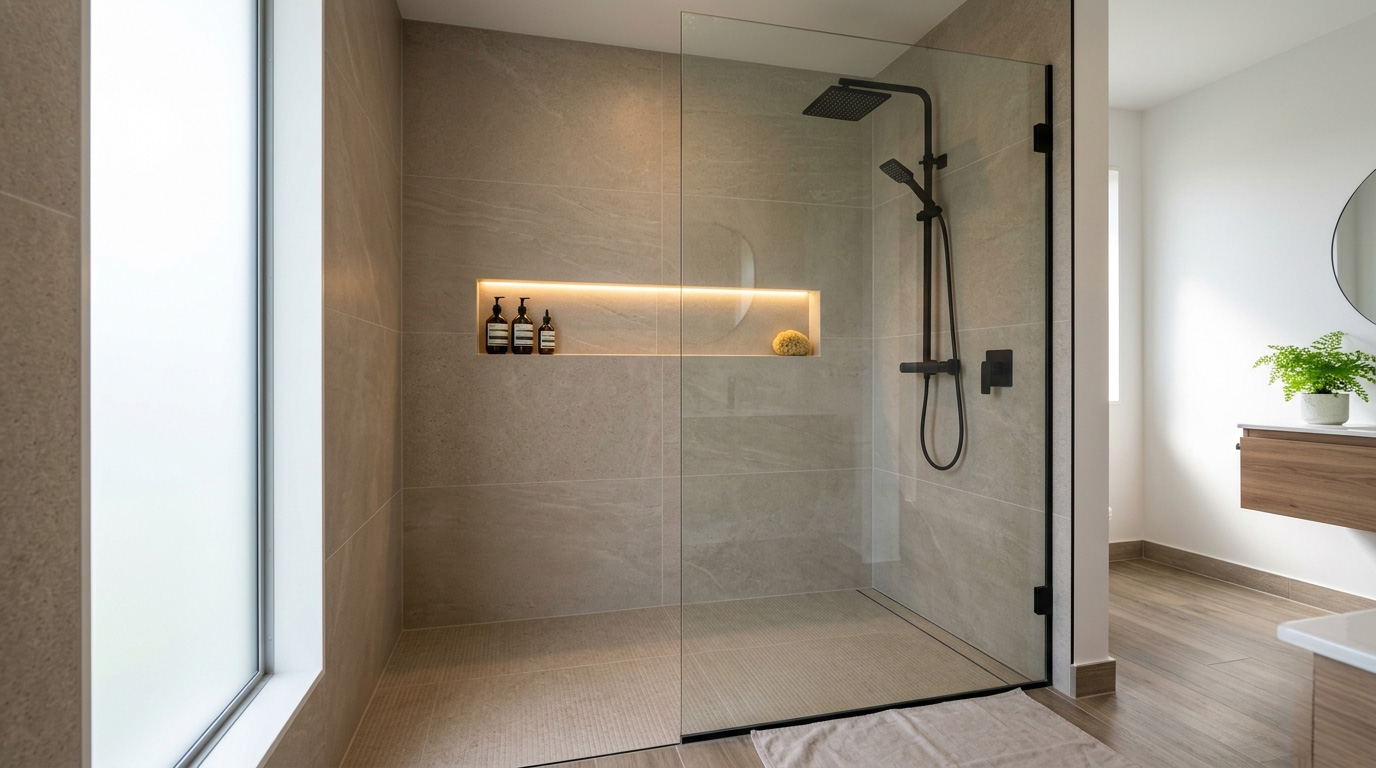
That’s a meaningful shift. It opens the door to more creative use of tiles in showers and wet areas, different formats, large-format tiles, textured surfaces, bold design statements, without the cost and timeline of a full consent process in every case.
It’s also worth noting what hasn’t changed. The Building Code still applies in full. Waterproofing must still meet the required standards. The work must still be carried out or supervised by a Licensed Building Practitioner (LBP), and any plumbing by a registered plumber. Getting it right matters, poorly installed waterproofing behind tiles is one of the most common (and costly) causes of home damage in New Zealand.
The Practical Upshot
For homeowners, this is genuinely good news, more flexibility, potentially less process, and a wider palette of design choices for your bathroom or shower renovation.
But ‘potentially exempt’ doesn’t mean ‘do it yourself.’ The standards are just as high. The difference is in who oversees the process and how it’s documented.
At Enhanced Renovations, we stay on top of these regulatory changes so you don’t have to. We can advise whether consent is needed for your specific project and ensure all work is done to code. And with in-house bathroom design expert Danielle Keane on the team, you’ll have expert guidance on how to make the most of the design freedom these changes allow, from space planning and surface finishes through to finding the right tiles to bring your vision to life.
Want to explore what’s possible in your space? Talk to the team at Enhanced Renovations, we’ll help you get it right, beautifully.
Common Questions